Specimen packaging & transport resources
199), IATA and OSHA. This page links to each source and to suppliers of compliant triple packaging. Every link was checked on 2026-10-31. Drivers are bonded & insured, HIPAA-compliant and OSHA-trained. Every delivery is GPS-tracked and closed out with proof of delivery.
CDC
- CDC — Submit and Ship Specimens (Infectious Diseases Laboratories) — Packaging, addressing and regulatory references for shipping specimens to CDC labs.
- CDC — Specimen Packing and Shipping Guidance (PDF) — Triple packaging, Category A/B/exempt classification and temperature guidance.
- CDC — Packing Category A, B and Exempt Specimens Job Aid (PDF) — Step-by-step packing job aid.
- CDC — Biosafety in Microbiological and Biomedical Laboratories (BMBL), 6th Edition — Advisory biosafety guidance, including a clinical laboratory appendix.
- CDC Safe Labs Portal — Resources and Tools — Biosafety, clinical lab and packing-and-shipping resource links.
U.S. DOT / PHMSA
- 49 CFR 173.199 — Category B infectious substances — Federal packaging requirements for UN3373 shipments and exempt specimens.
- 49 CFR 173.196 — Category A infectious substances packagings — Packaging standard for Category A (for reference).
- PHMSA — Transporting Infectious Substances Safely — DOT brochure on classification, packaging, marking and training.
Air transport (IATA / WHO)
- IATA — Dangerous Goods — IATA Dangerous Goods Regulations, including Packing Instruction 650 for UN3373.
- WHO — Guidance on regulations for the transport of infectious substances — International overview of Category A/B classification and packaging.
OSHA
- OSHA — Bloodborne Pathogens and Needlestick Prevention — Overview, training and compliance resources.
- OSHA — 29 CFR 1910.1030 Bloodborne Pathogens Standard — Full text of the standard.
Specimen packaging and equipment suppliers
Listed for convenience only. We are not affiliated with these companies and do not endorse specific products.
- MarketLab — Specimen bags, transport and lab supplies.
- McKesson Medical-Surgical — Medical and lab supplies.
- Fisher Scientific — Clinical and diagnostic lab products.
- Thermo Fisher Scientific — Lab equipment and consumables.
- Uline — Shipping boxes, insulated shippers and specimen bags.
- Saf-T-Pak (Inmark Life Sciences) — UN3373 and Category A specimen transport packaging.
- Therapak — Specimen collection and transport kits.
- Cardinal Health — Medical and laboratory products.
- VWR (Avantor) — Lab supplies and cold-chain packaging.
- Henry Schein — Medical practice and lab supplies.
Specimen transport resource questions
- Which regulation covers shipping Category B specimens?
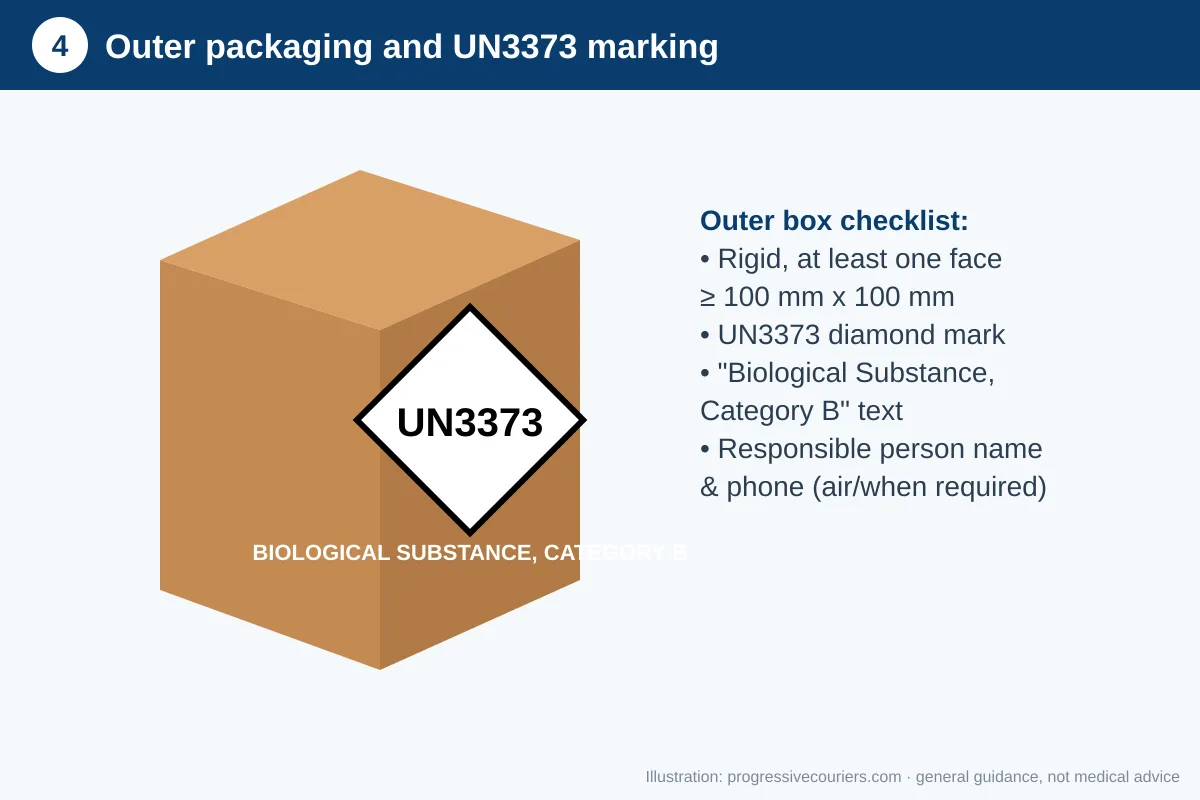
- In the United States, DOT regulation 49 CFR 173.199 covers Category B biological substances and exempt specimens moved by ground, and IATA Packing Instruction 650 applies to air shipments.
- What is triple packaging?
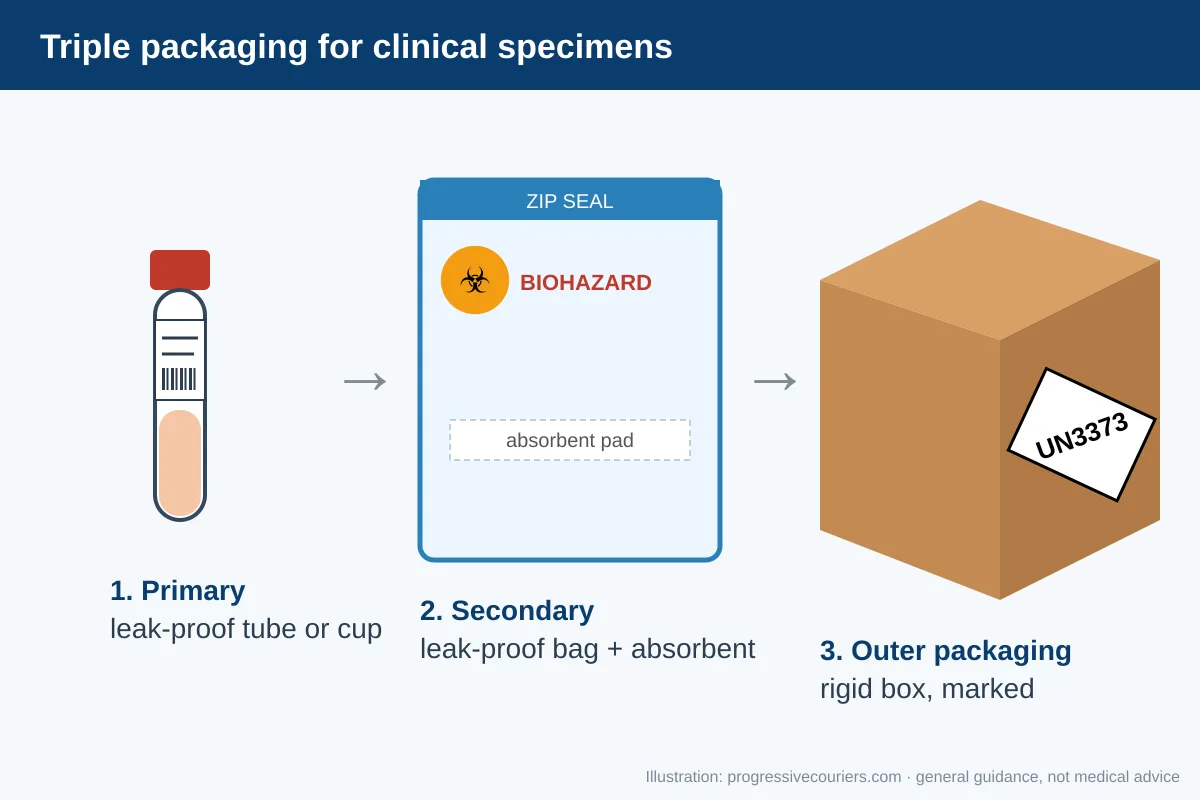
- A leak-proof, labeled primary receptacle, a leak-proof secondary bag or container with enough absorbent to hold the full contents, and a rigid outer package. The requisition rides outside the secondary bag.
- Does OSHA apply to specimen couriers?
- Yes. The OSHA Bloodborne Pathogens Standard (29 CFR 1910.1030) applies to workers with occupational exposure, which is why specimen couriers receive bloodborne pathogen training and use spill kits.
Lab-by-lab guides
National reference laboratories
- Quest Diagnostics specimen packaging & transport guide
- Labcorp specimen packaging & transport guide
- Sonic Healthcare USA specimen packaging & transport guide
- ARUP Laboratories specimen packaging & transport guide
- Mayo Clinic Laboratories specimen packaging & transport guide
- BioReference Laboratories specimen packaging & transport guide
Arizona hospital and regional laboratories
- Sonora Quest Laboratories specimen packaging & transport guide
- Banner Health specimen packaging & transport guide
- HonorHealth specimen packaging & transport guide
- Dignity Health / CommonSpirit (Arizona) specimen packaging & transport guide
- Mayo Clinic Arizona specimen packaging & transport guide
- Phoenix Children's specimen packaging & transport guide
- Valleywise Health specimen packaging & transport guide
Austin and Texas laboratories
CDC, DOT, IATA, OSHA and supplier resources →
Lab specimen transport requirements: packaging, temperature & chain of custody →
OSHA bloodborne pathogens & specimen transport requirements →
Not medical, legal or regulatory advice. This guide is general information last reviewed 2026-10-31. Requirements change; always follow the receiving laboratory's current test directory and instructions, and current DOT, IATA and OSHA rules. Illustrations are original diagrams for general education.
Questions? 602-499-2672