ARUP Laboratories specimen packaging & transport guide
ARUP Laboratories publishes specimen transport instructions for its clients. The points below come from ARUP's public specimen transport brochure and specimen information page. Package each specimen in a labeled primary receptacle, a leak-proof secondary bag with absorbent, and a rigid outer container, with the requisition kept separate.
Independent guide · Not affiliated with ARUP Laboratories · Updated 2026-10-31
What ARUP Laboratories's public documentation says
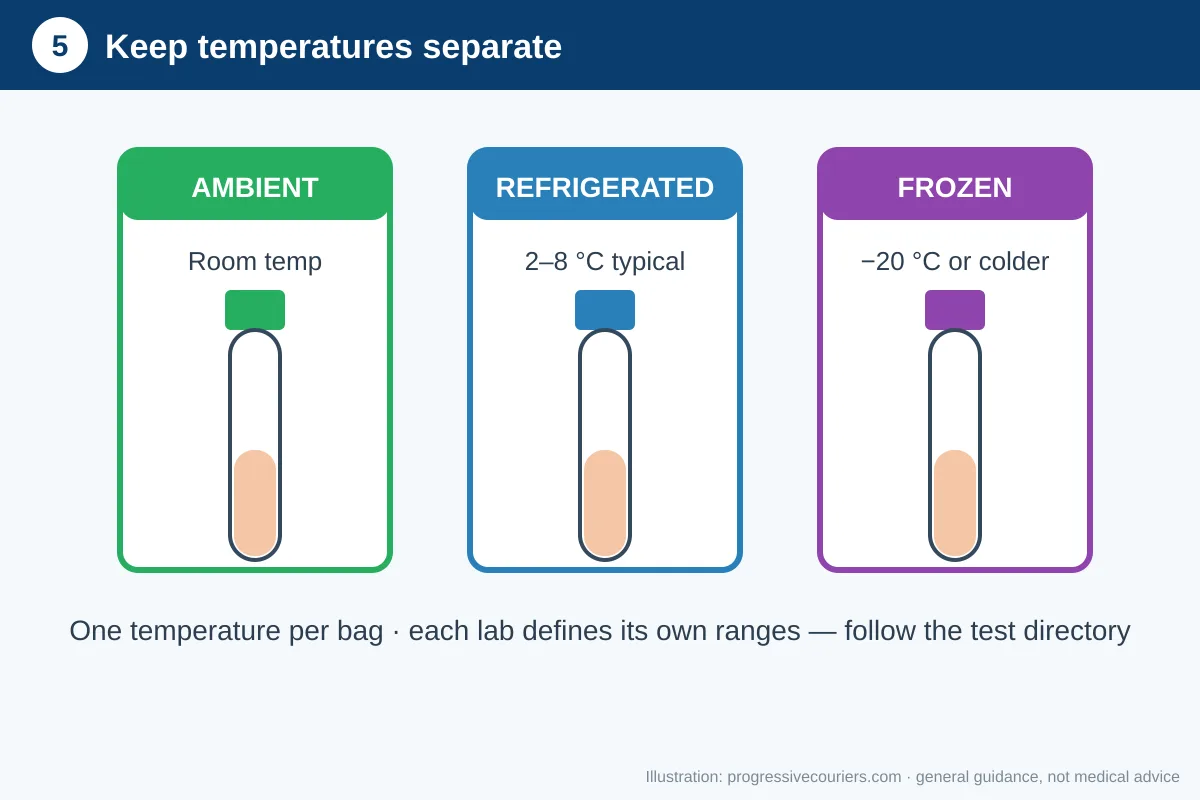
- ARUP uses barcoded, temperature-specific, color-coded specimen bags so clients, couriers and ARUP staff can identify the required temperature. (source)
- All specimens must be in leakproof primary containers placed in leakproof secondary containers; ARUP states couriers are prohibited from picking up specimens that are leaking or not in secondary containers. (source)
- Tube racks are used when transporting more than one specimen and meet the DOT requirement to keep fragile containers from touching; otherwise fragile specimens are individually wrapped. Racks are marked with the holding and transport temperature. (source)
- Clients complete the bag's central information section (date, client number and specimen count) and keep the tear-off receipt. (source)
- ARUP's standard transport tube holds a maximum of 4 mL, should keep air space at the top to allow expansion, uses a threaded leakproof cap, and should not be sealed with Parafilm. (source)
- ARUP-supplied transport containers are validated to 95 kPa under 49 CFR 178.605 and IATA DGR 6.3.5; clients are responsible for containers not supplied by ARUP. (source)
Lab instructions change. Check the linked pages and the specific test's directory entry before you package.
Official ARUP Laboratories resources
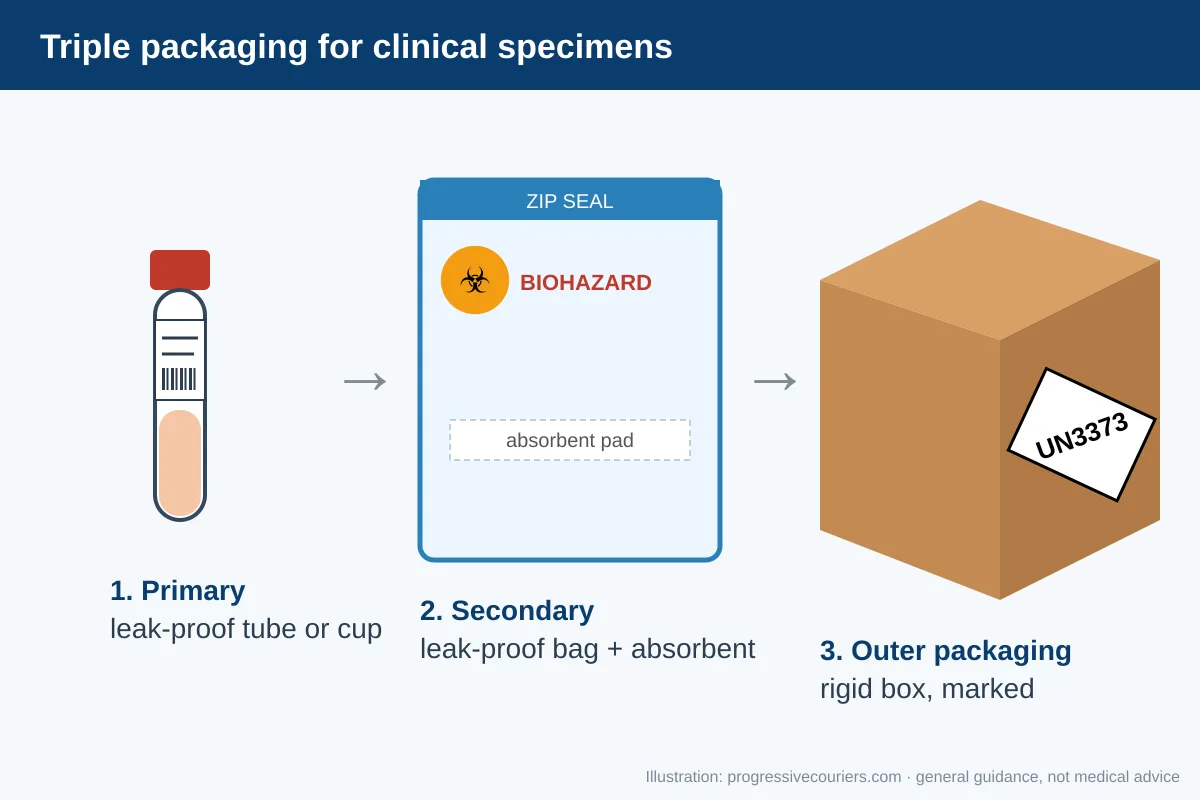
General packaging steps
- Primary receptacle. Use the container the test requires, check the expiration date, tighten caps fully, and label with at least two patient identifiers plus collection date and time.
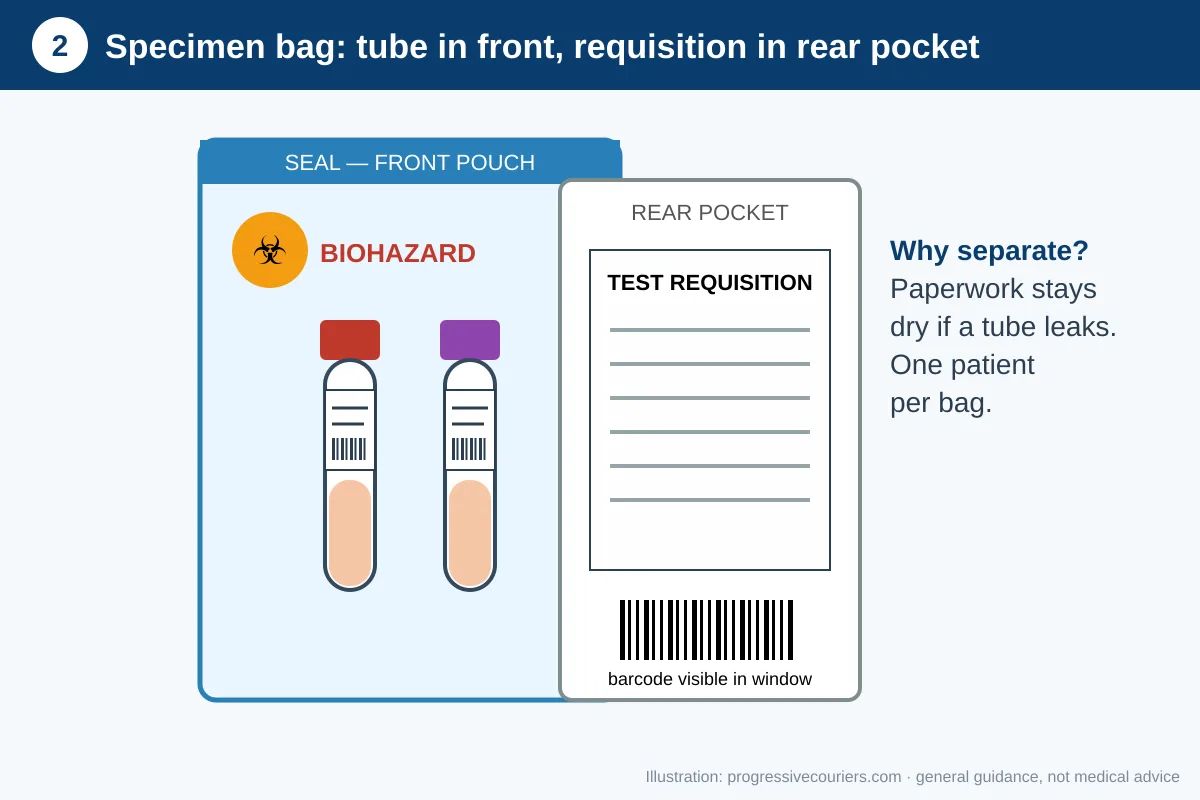
- Requisition. Match the order to the label exactly and place it in the bag's separate rear pocket so it stays dry.
- Secondary bag. Seal specimens in a leak-proof biohazard bag with enough absorbent for all the liquid; keep fragile tubes from touching.
- Temperature. One temperature per bag; follow the lab's ranges for ambient, refrigerated and frozen.
- Outer container. Use a rigid, insulated container; mark UN3373 for Category B shipments and follow dry-ice rules when used.
- Handoff. Count bags with the courier, note the time and temperatures, and keep your copy of the manifest.
If your practice is in the Phoenix metro or the Austin area and you send specimens to a national lab's local patient service center, processing site or drop location, a local courier can carry the packaged specimens across town on your schedule. Package exactly as the lab instructs — the courier does not repackage specimens.
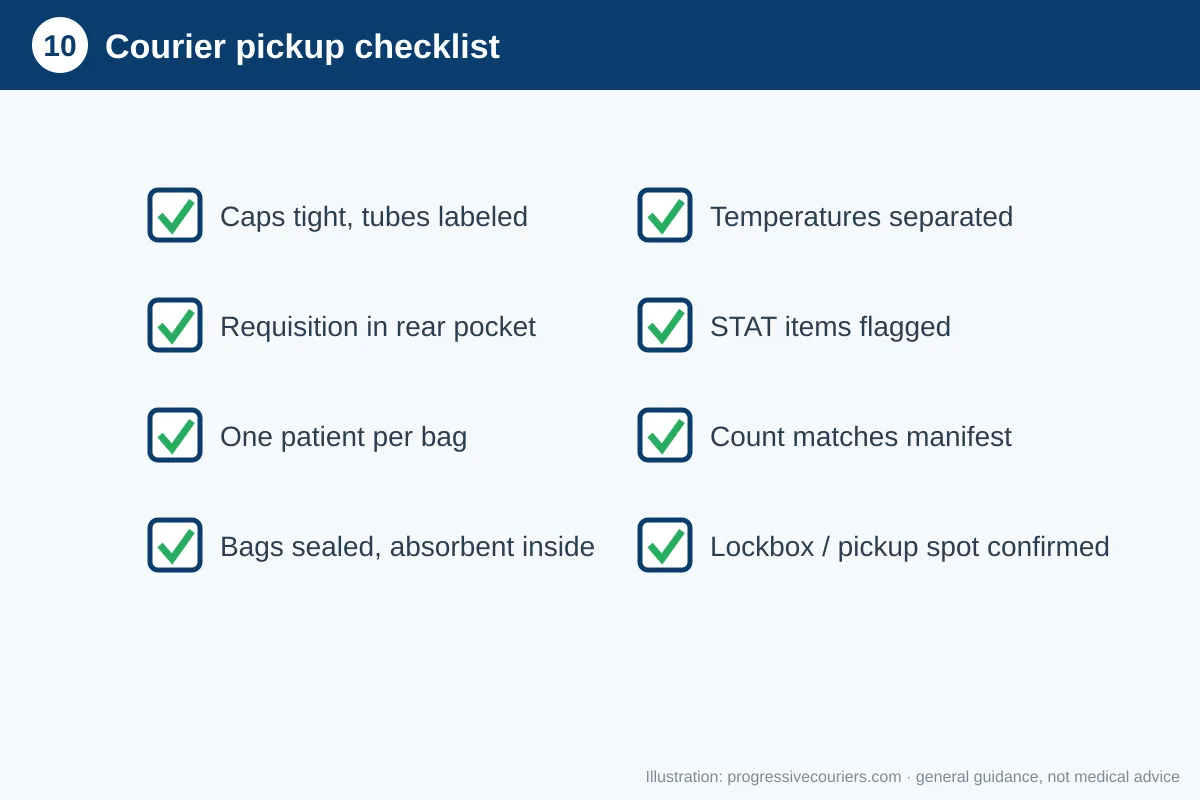
For the full walkthrough — including dry ice, 95 kPa bags, UN3373 vs. Category A, chain of custody and stability — read our complete specimen packaging and transport guide, and see the CDC, DOT, IATA and OSHA resources.
Other national reference laboratories
Frequently asked questions
- How do I package a specimen for ARUP Laboratories?
- Start with ARUP Laboratories's own published instructions, summarized with sources on this page, and its test directory for test-specific rules. As general guidance (not ARUP Laboratories-specific), most labs also expect a tightly capped, labeled primary receptacle, a leak-proof bag with absorbent, the requisition kept separate from the specimen, and temperatures separated.
- Is Progressive Couriers affiliated with ARUP Laboratories?
- No. Progressive Couriers is an independent courier and is not affiliated with, endorsed by, or an approved courier for ARUP Laboratories. This guide is informational.
- Where does Progressive Couriers deliver specimens?
- In the Phoenix metro and Arizona, and in the Austin, TX area. We transport ordinary clinical specimens, including Category B and exempt specimens, and do not accept Category A infectious substances.
Lab specimen transport requirements: packaging, temperature & chain of custody →
OSHA bloodborne pathogens & specimen transport requirements →
Not medical, legal or regulatory advice. This guide is general information last reviewed 2026-10-31. Requirements change; always follow the receiving laboratory's current test directory and instructions, and current DOT, IATA and OSHA rules. Illustrations are original diagrams for general education.
Questions? 602-499-2672